QR code error correction, explained with a live demo
What the L, M, Q and H error-correction levels really mean: drag the slider to damage a live QR code and watch when each level stops scanning.
Pick an error-correction level. Higher levels add more redundancy and more modules.
Drag the damage slider to cover part of the code.
The verdict updates live as the decoder loses and regains the code.
Questions
What do the QR error correction levels mean?+
L recovers about 7% of damaged data, M 15%, Q 25% and H 30%. Higher levels cost more modules, so the code gets denser for the same content.
Which level should I use?+
M for most links. Q or H when a logo will cover the centre or the print will live outdoors. L only when the code must be as small as possible and stays clean.
Does error correction let me put a logo in the middle?+
Up to a point. Covering under 20% of the area with level H usually works. Covering a finder pattern in a corner never does, at any level.
How does AriaQR fit a whole picture in?+
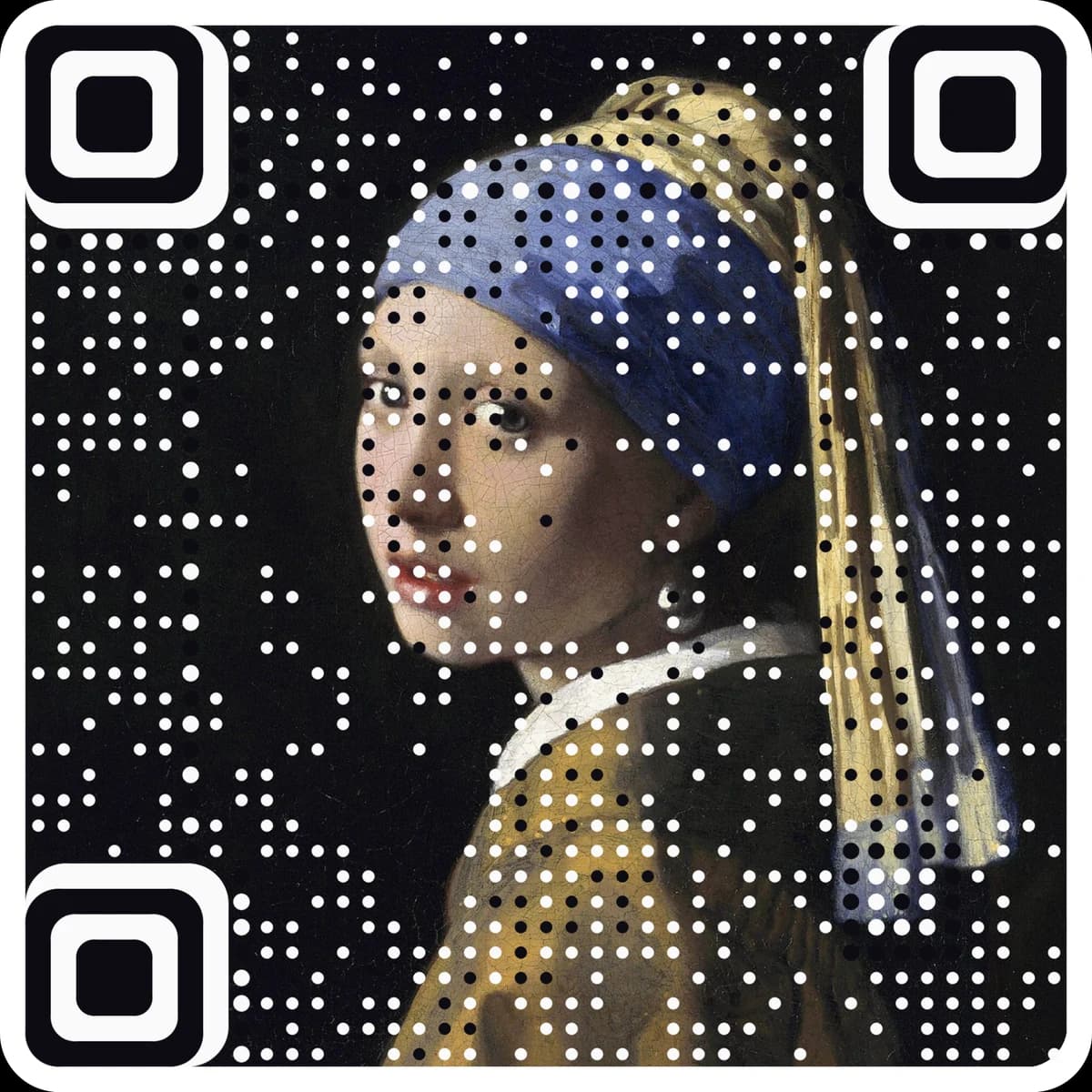
It does not rely on error correction to hide damage. The image is placed in the free bits of the code so the data is intact, then every code is verified on real decoders.
More free tools
Learn the terms
- QR codeA QR code is a two-dimensional matrix barcode that stores data in a square grid of dark and light modules. DENSO WAVE invented it in 1994, and phone cameras and imaging scanners can read it.
- How QR codes workA QR code works by turning data into codewords, adding Reed–Solomon error correction, and placing the bits in a grid around fixed patterns that help a camera find, straighten and read it.
- Format informationFormat information is a 15-bit field in every QR code that records its error correction level and mask pattern. It is stored twice, next to the finder patterns, so a scanner can read it first.
- Data capacityData capacity is how much a QR code can hold. The largest, version 40 at level L, stores up to 7,089 digits, 4,296 alphanumeric characters or 2,953 bytes; smaller codes and higher error correction hold less.
- Error correction levelsError correction levels set how much of a QR code can be damaged and still scan. There are four: L recovers about 7% of codewords, M about 15%, Q about 25% and H about 30%.
- Reed–Solomon error correctionReed–Solomon error correction is the math that lets a damaged QR code still scan. It adds check codewords to the data so a reader can rebuild missing or wrong bytes, up to a set limit.
The next step
Make the code the artwork.
These tools make and check classic codes. AriaQR turns your photo, logo or illustration into the code itself, verified on real decoders before you download, with a link you can edit and track.